The Scraps Book by Lois Ehlert

The Scraps BookThe Scraps Book—Notes from a Colorful Life by Lois Ehlert. Beach lane books (Imprint of Simon & Shuster), New York, NY 2014. 

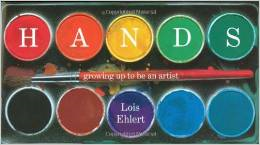
In 2013 I had the privilege of meeting Lois Ehlert at the Sheboygan Children’s Book Festival. I had brought along my copy of Hands(Harcout Brace1997), for her to sign. I had purchased it at an annual SCBWI Wisconsin retreat several years previous, probably right after the book was released.  Lois was pleasantly surprised when she was presented with this particular copy to sign, because, she said, “You must have gotten that a long time ago.” She went on to explain that because the book was shaped like a work glove, it was difficult for libraries to shelve. I have since done a search for Hands and discovered a different copy with the same name but a more standard cover was released in 2004. I also found a copy of the original, work-glove shaped copy in my library system. It came to me intact, except for the dog-eared fingers. I’ve also discovered that the copy I have, signed by Lois, is probably quite rare. I won’t, however, be selling it on EBay anytime soon! Hands Lois Ehlert

Hands portrayed how Lois was influenced by her parents to become an artist. It is from the point of view of a young child. The Scraps Book is even more autobiographical as it is from the point of view of the adult artist. That is not to say that Scraps won’t appeal to children. With its vibrant colors of scraps of fabric, buttons and flowers, a child could easily spend much time pouring over a single page of this gem.Hands 2004

What both Hands and The Scraps Book portray in loving prose and picture is the important role Ehlert’s parents played in her development as an artist. Early on her father let her help him in his basement workshop and gave Lois her own “spot”: a wooden folding table. He taught her how to “…paint, saw, and pound nails.” Her mother introduced her to sewing with the many “…colorful fabric scraps, buttons, lace, ribbons, and many scissors…” To this day she uses her mother’s pinking shears.

Both of these books will be cherished. More like journals than books, both are written with love and remembrance of those parents who gave Lois the support she needed to become the accomplished artist she is today. Any child who loves working with his or her hands is bound to love these books into a similar dog-eared state, like that of the library copy I found.


Posted in Uncategorized | 1 Comment

My Bus a Great Introduction to Math

My Bus by Byron Barton. Greenwillow Books, New York, NY 2014My Bus

My Bus might just be the best book that “teaches” Math for the youngest child. Joe drives his bus to town. At his first stop, he picks up one dog. At his second, two cats get on the bus. Each stop adds more cats or dogs, in sequential order.

When Joe finally fills his bus he has five cats and five dogs. He then delivers them to their destination, but not by ones: “I drive one dog and two cats to the boat. They sail away.” Next, he delivers two dogs and one cat to the train. He continues on his route until, at last, he arrives home with one dog—his dog. In this way, the child may have his or her first exposure to subtraction. Barton has created a clever and subtle way to incorporate addition and subtraction into the story without using the typical counting book format. On the last page, night has fallen and Joe’s bus is parked. But two cats are heading toward the bus, perhaps anxious for the next day and the opportunity to ride off on a new adventure. One word ends the story: Meow.

Emergent readers will thrill to the simple text. The illustrations, done in such a way as to mimic the art of a young child, are spot on. (Forgive me, an unintentional pun as the dogs do, indeed, have spots!)

According to the jacket copy, “Byron Barton is the creator of many picture books for young children, including My Car, Building a House, Machines at Work, and Little Red Hen.” After reading My Bus, I can’t wait to read the rest of them. I know there are more delightful stories waiting for me—and my two-year-old granddaughter—to discover.


Posted in Uncategorized | 1 Comment

Once I Ate a Pie–A Picture Book for Dog Lovers of All Ages

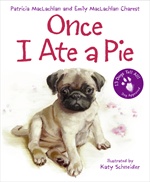
Once I Ate a Pie, by Patricia MacLachlan and Emily MacLachlan Charest; illustrated by Katy Schneider. Harper Collins, New York, 2006. 

Dog lovers young and old will delight in these expressive canines that Schneider’s paintings so expertly Once I Ate a Piedepict.  There’s Mr. Beefy, the bulldog, who, when he steals people food, likes to eat in private and did, indeed, once eat a pie. There’s Gus, the German Shepherd who wants his people in a group. “Like sheep,” he says. Then there’s Lucy, the shelter dog, who sleeps between her two owners.

The descriptive poetry by the MacLachlan’s that accompanies each dog is beautifully crafted. “Luke” is bound to bring a tear to the eye of anyone who owns an older dog.  “I dream about when I was young. I chased snowflakes in winter. And ran through the grasses in spring..…But now the sun is warm. And I sleep. And dream.”

When I saw this book on the shelf, I knew I had to buy it—for my adult daughter who owns two dogs.  It is indeed a book for all ages of dog lovers, but beware, the youngest child will undoubtedly want a puppy after experiencing the delightful canines in this book.  


Posted in Uncategorized | Leave a comment

Dog and Bear Books Model The Meaning of Friendship

dogandbearthreeDog and Bear,Three to Get Ready by Laura Vaccaro Seeger. A Neal Porter Book, Roaring Brook Press, New York, NY 2009. 

Three to Get Ready is the third book in the delightful Dog and Bear series that began with Two Friends, Three Stories and Two’s Company. These engaging pals are at it again, getting into trouble, being confused but always, in the end, helping each other and being best friends. A new installment just released this past July, Dog and Bear, Tricks and Treats, is a Halloween book.

If you haven’t seen these books, get to your library or bookstore at once. The humorous antics of the two friends and the jams they get into will delight the youngest child. New readers will thrill to the fact that they are able to read the spare text. I was impressed that Vaccaro’s illustrations, that at first glance look deceptively simple, brilliantly depict the love the two best friends have for each other. And this is what is so pleasing about these little stories. Whether it’s dog helping bear get a bucket off his head or bear preparing a soft spot on the floor when dog is jumping on the bed and is sure to fall, these two pals care about each other and demonstrate unending empathy for each other.

According to her website, “Laura Vaccaro Seeger is a New York Times best-selling author and illustrator and a 2-time winner of the Caldecott Honor Award, winner of the New York Times Best Illustrated Book Award, the Boston Globe/Horn Book Award for Best Picture Book, and a 2-time winner of the Theodor Seuss Geisel Honor Award. She is also the recipient of both the Massachusetts Reading Association and the New York Empire State awards for ‘Body of Work and Contribution to Children’s Literature’.”

I can’t believe I hadn’t seen her books before. To see them all visit her website at www.studiolvs.com


Posted in Uncategorized | Leave a comment

Mira in the Present Tense a modern “Are you there, God?…”

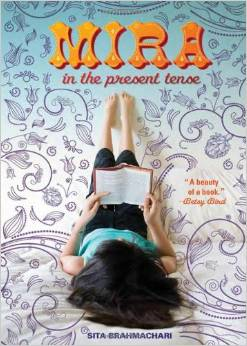
Mira in the Present Tense by Sita Brahmachari. Albert Whitman & Company, Chicago, IL 2013. Originally published in 2011 in the UK by Macmillan Children’s Books as Artichoke Hearts. Mira in the Present Tense

Mira Levenson is turning twelve and she’s worried about her grandmother Josie, who is probably dying, her best friend, who is changing too fast and a boy she meets in Literature Club with a mysterious past. While all these worries tangle around in her mind, she also comes smack up against her developing body and all that entails.

When Pat Print, the visiting author to Mira’s school, gives an assignment to write a month-long diary, Mira tells Pat that she finds it easier to paint than to write. When she reads a passage that Pat has written in the present tense, “…I…disappear into it, like I do when I’m painting. It’s as if I don’t exist anymore; I just get lost somewhere in there among the characters…” Mira decides to write her diary in the present tense.

In one short month, Mira will get her first period, help Josie paint her own coffin, and discover a sad truth about the violent past of Jide’ Jackson, the boy she has a crush on. “…once you know this stuff happened…you can’t unknow it, can you?”

This novel is a thoughtful, funny and heartbreaking story of growing up and growing away from childhood, while experiencing great loss; but all the while, hanging onto what’s important and everlasting. It has been compared to Judy Blume’s breakout novel Are you There, God, It’s Me, Margaret? The young girls in both stories experience several “firsts”: first bra, first period, first kiss. Margaret talks to God, Mira talks to “Notsurewho Notsurewhat.”

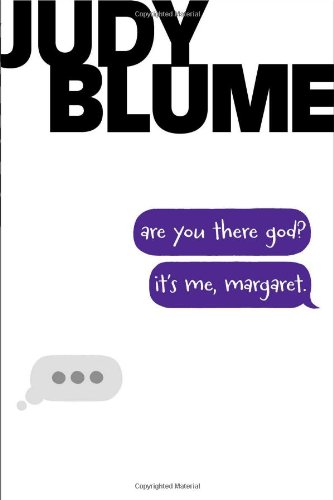
Are you there, God, it's me Margaret

I recently read Blume’s book for the first time. It remains a strong story, able to pass the test of time. Which makes me wonder: why did Atheneum Books for Young Readers re-release it this year with a cover that can only be described as misleading? Certainly, the marketing department wanted to appeal to today’s young girls, but all they’ve accomplished by making the cover suggest that Margaret texts God is to mislead readers. Young girls today are accepting of historical fiction, which is what Margaret, published in 1970, represents to them. But to design a cover that purposely suggests this is a contemporary book will only serve to disappoint the reader. When the reader finds the characters in “Margaret” go to parties dressed in velvet and suits and ties and everyone has a landline, she’s going to feel tricked into reading the book.

Judy Blume’s book stands the test of time very well, thank you. Marketers didn’t need to fool girls into reading it.

Posted in Uncategorized | Leave a comment

Doll Bones a Suspenseful Tale of Mystery and Growing Up

Doll BonesDoll Bones, by Holly Black. A Margaret K. McElderry Books, Simon and Schuster New York, NY, 2013. 

“He wondered whether growing up was learning that most stories turned out to be lies.” In Holly Black’s Newbery Honor book, Zachary Barlow struggles with growing up and away from childhood games, the return of his father, and a friend who insists a doll is demanding to be buried.

Zachary, Poppy and Alice have an ongoing fantasy game with action figures that are very real to them. When Zachary’s father returns after an absence of three years, he feels Zach shouldn’t be playing with action figures, especially with two girls. He should instead concentrate on the basketball team. Zach is a good player and his dad is proud of his skill.

When Dad takes the drastic step of throwing out Zach’s action heroes with the garbage, his dad explains, “He’s twelve years old, playing with a bunch of crap.   He’s got to grow up…” Zach goes into a rage, but decides he can’t tell his two friends what his dad did. So he tells them he doesn’t want to play anymore, that they are too old to be playing silly games. His friends are shocked and blame it on his new friends on the basketball team and Zach lets them believe that. As his relationship with his two friends changes, he finds himself lying    to them more and more.

When Poppy comes up with an elaborate plan to save a mysterious doll, Zach goes along and soon the trio find themselves far from home on an adventure they hadn’t planned. Along the way, they all learn something about growing up and what’s true and what isn’t. The reader, however, will be held in suspense until the end of the novel and, even then, may not know exactly what happened. Was Poppy’s story true? Did the doll have the power to get what she wanted? Or was it just another story—a lie? Doll Bones will keep the reader turning pages until the very end.


Posted in Uncategorized | Leave a comment

If I Ever Get Out of Here, a novel of friendship, race and The Beatles

If I ever get out of hereIf I Ever Get Out of Here by Eric Gansworth, an Arthur A. Levine Book, Scholastic Inc., 2013. New York, NY.

How do you find friends when you’re a Native American, surrounded by white kids in an accelerated program? Lewis Blake lives on the Tuscarora Indian Reservation in New York. His best friend on the Rez is sort of a jerk, but when he finally becomes friends with a white kid, his Uncle warns him that he will never fit in with “those people.” So Lewis struggles with the question of “where do I belong?”

It is 1975 and Lewis’ favorite band, The Beatles, have broken up. He’s taken up interest in Paul McCartney’s Wings (hence the double meaning of the title of the book.)

Gansworth explains in the author note that “…each part title is a riff on a song, as noted, and each of the chapters is named, in alternating order, for a Beatles song and a Paul McCartney post Beatles song.” I found this technique immersed me in the setting of the story, firmly grounding me in the seventies as I read it.

Lewis may actually want to “get out of here,” here being the Rez, but he is unsure of his path. His home is in such poor condition that snow blows through it during the common blizzards of upstate New York. Their stove is actually outside the main part of the small house, making cooking in the winter a very cold proposition. So, in one way he does indeed want to eventually get off the Rez.

But it’s the only home he’s ever known. When he becomes friends with George, a boy who lives on a nearby military base, Lewis finds that their living situations have some things in common. But George’s house is not falling apart, so Lewis keeps making excuses for why he can’t invite George over, the worst excuse being a lie about his mother.

Lewis and George share a love of all things Beatles and Paul McCartney. It turns out George’s father also shares this obsession and soon Lewis feels almost like a member of George’s family. But when George becomes preoccupied with a girlfriend, and the school bully, who mercilessly beats up Lewis every chance he gets, goes unpunished, Lewis realizes he, alone, must take drastic action.

This is quite simply one of the best YA books I have recently read.  The portrayal of an interracial friendship, the overt racism of the seventies, and the music that plays all throughout in the background, will resonate with many a teen and even most of their parents as well. In the end, If I Ever Get Out of Here is a story of what true friendship means and how it can bond two people and see them through the obstacles of growing up, no matter how different they are, or the circumstances of their birth.

Posted in Uncategorized | 1 Comment

My Creative Process Blog Tour

I’d like to thank award-winning author, Kashmira Sheth, for inviting me to participate in the Writing Process Blog Tour. I have read several of her books so am hard pressed to name a favorite but Keeping Corner, the emotionally gripping story of the consequences of a young girl’s arranged marriage, stands out as one I will never forget.

Here’s the link to Kashmira’s blog to find out more about her writing process.

http://kashmirasheth.com/blog/

Here are the questions I am answering: 

    1) What are you working on?

I am always working on several different projects. I recently attended a wonderful workshop facilitated by Eric Rohmann, so I now have a new picture book manuscript I’m just starting to flesh out. I am also working on a middle grade fantasy novel.  

    2) How does your work differ from others of its genre?

A sense of place permeates everything I write, and that place is Wisconsin. I love the state and I love history, so my books take place in Wisconsin during different time periods. 

    3) Why do you write what you do?

Right now I’m working on fantasy. I got hooked on science fiction when I discovered Star Trek many years ago. What I loved about that show was that the human condition was always the focus. It was never just about the bells and whistles. It wasn’t much of a leap from science fiction to fantasy, but history has always been a part of my writing as well. 

    4) How does your writing process work? Hmmm. Good question. I think the best quote I ever heard about becoming successful with your writing is, “keep your butt in the chair.” I’m not sure who said it but it’s so true. When non-writers ask me how often I write I stress to them that a writer cannot just write when in the mood. You’d never get published. 

Here are two more authors that have great books: 

Patty Pfitsch. Riding the Flume is an action packed adventure/mystery that takes place in California during the time the sequoia trees were being harvested. Patty is an accomplished writer of several historical fiction books, all of which feature strong female characters. Visit her blog at: www.patriciacurtispfitsch.wordpress.com

  Goldie Alexandar is a prolific Australian writer with over 80 books to her name. Neptunia is just one of them. Visit her blog atRiding the Flume

www.goldiealexandar.com/blog

neptunia

Posted in Uncategorized | Leave a comment

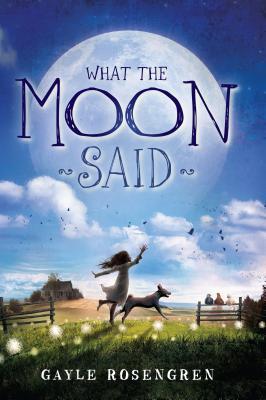
What the Moon Said: A Sensitive Portrayal of Depression Era Life

What the Moon SaidWhat the Moon Said by Gayle Rosengren G.P. Putnam’s Sons, New York, NY, 2014

Esther wonders if Ma really loves her. Her best friend, Shirley, gets lots of hugs and smiles from her mother. But Esther’s mother seems to love Esther’s siblings more. She never hugs Esther. She rarely smiles. She seems to be preoccupied with “signs.” A ring around the moon means bad luck. A black cat crosses your path and you’re sure to have an accident…..and on and on.

Esther comes home from school one day to find out Pa has lost his job. It is 1930 and many men are losing their jobs. When Pa decides to buy a farm in Wisconsin, Esther must say goodbye to Shirley and life in Chicago. The farm has no electricity or indoor toilet, but it does have a dog and horses. Soon, Esther settles into farm life and loves it. If only Ma loved her.

What the Moon Said explores the question: what does it mean to really love someone and how is that love demonstrated? Ma is not a demonstrative mother, and whatever Esther does to try to get a hug, it always turns out wrong. Eventually, Esther will learn that love comes in many forms, and actions do indeed speak louder than words.

In this sensitive novel, Gayle Rosengren hits all the right notes, portraying the turbulent emotions of a young girl during a turbulent time in our history.

Posted in Uncategorized | 2 Comments

OdinsPromiseI recently interviewed Sandy Brehl, the author of Odin’s Promise, A Novel of Norway. (Published by Crispin Books, an imprint of Crickhollow Books, Milwaukee WI 2014) We spoke via Skype.

SGL: You say that Odin’s Promise started as a picture book, morphed into an adult story and finally ended up a middle grade historical. Tell me a little about that Journey.

SB: I tell people my book took 35 years and one year to get published. The inspiration for what I thought would be a picture book came when I first visited Norway 35 years ago. I went with a friend who had many relatives there. They told us stories about what it was like during the German occupation. All evidence of old Norway were removed and replaced with a ‘New Norway’ flag representing a partnership with the Nazis. I saw these stories as richly illustrating a picture book. I knew enough about picture books, but didn’t know that I really needed to have little kids in it!

SGL: When did you realize it wasn’t a picture book?

SB: I sent it to a book doctor who told me it wasn’t a picture book, but if re-worked, it could work as a book sold in museum gift shops.

(Sandy explains here that she worked as a teacher in classes for regular grades and special needs students for 40 years. After retirement she had more time to write.)

SB: I re-worked the picture book as an adult book. I had it vetted on cultural authenticity and had good feedback. I was in a critique group that was working on adult writing and they loved it.

(Around this time Sandy became a member of the Society for Children’s Book Writers and Illustrators – SCBWI. She joined a critique group that was working on picture books. Eventually she was advised to make the story middle grade.)

SGL: During revisions, you said you read a dissertation that opened your eyes to the resistance in Norway.

SB: The dissertation, by Kathleen Stokker, PhD, was “How Folklore Fought the Nazis.” Young people in Norway were finding ways to resist the Nazis by using their humor and culture. For example, celebrating the festival of Syttende Mai was forbidden. One of the stories I heard while in Norway was that one couple purposely planned their wedding for that day, like the couple in the book. Another way they resisted was by hiding radios to listen to the BBC to find out progress of the allied forces or the fate of exiled King Haakon VII. Radios were forbidden by the occupying army.

SGL: Mari, your main character, finds her voice and helps the underground in her own way. Were you shy as a child? Is Mari based on you?

SB: She wasn’t based on me in any way while I was writing. She struggles to find a sense of power or control her world. I, growing up, thought I could control the world. If I have a role, I run with it and do it confidently, like being a teacher. But if I don’t have a designated role, I just as soon not be there. I’m really uncomfortable in strictly social settings. Something I discovered after I wrote Odin’s Promise is that Mari is very much like stories my mother told me about herself. She grew up in a very rural area of Kentucky. She was great in school. Her siblings were all much older than she, so she grew up shy and with a dog as her best friend.

SGL: How long have you been writing? Did you dream of being a writer when you were a child?

SB: No. In general, I did well in school. I thrived—it was a role I could take on to define myself. I always wrote competently. Writing assignments were functional, not really creative. My mother was always a writer. She had things published and kept multiple journals. I did not keep a journal. I didn’t consider writing a viable career. When I hear kids say they love to write I tell them not to give up on writing as a career.

SGL: You mentioned in a blog post that there are a handful of characters from books you read when you were young that stayed with you. Can you name a couple and why they had an impact on you?

SB: At an early age I read a book called Dibs in Search of Self. It was written for adults and it was about a child who is seeing a therapist. When the child hears the words “rain forest,” he pictures the roots of a forest raining down and destroying everything, a very terrifying image. Another book that impressed me was Clay Fingers, a book about a therapist who used clay in therapy. Both of these books convinced me that I wanted to work with kids who needed extra support.

SGL: Is Odin’s Promise your first attempt at publishing? Have you had many rejections?

(Sandy laughs) SB: I wrote a Christmas story as a result of a fender bender. I didn’t have a lot of money to pay to have my car fixed up so I thought maybe I can write a Christmas story and get paid for it. It was already October. I was thinking it could be published in time for Christmas! That was rejected but I ended up giving it as a gift that year because I had no money for gifts. After that I began reading Children’s Writer and Illustrators Markets and other resources. I have file drawers full of rejection letters. I used those with kids all the time. I used them in my classroom when I was teaching to show them what editors said about my writing. When teaching kids writing, looking at early drafts is important.

SGL: What’s next for you? What are you working on now?

SB: I have a lot of Norway research far beyond the first year of occupation, so I am considering a sequel. It was not my original intent, but readers have expressed interest. I have two picture book manuscripts that I am sending out, two more that I’m re-working with my critique group, and many others in various states of development. I’m also working on a graphic style book and a middle-grade contemporary with a male character.

SGL: Do you have any appearances coming up?

SB: Marketing this release is my current project. The schedule of events is just now starting to fill in and I welcome inquiries about appearances. A study guide was piloted before the book released, which is now offered on my website. I’ll meet with a middle grade ‘lunch bunch’ at New Berlin Public Library in August, speak to a Rotary Club in July, have a signing at Whitnall School District on September 13 from 2:00-3:00. In March 2015, the Wisconsin Norwegian Elkhound group will host a national gathering in Wisconsin. They are giving signed copies of my book as prizes to winners, and I’ll have a presentation and signing session there. My website is being revised this summer and a full calendar will be posted there. The contact tab can be used now to inquire about visits and signings.

Sandy finished our interview by joking: “If I can get one book published every 35 years I’ll shoot for a career!”

After reading Odin’s Promise I’m convinced she won’t have to wait that long. Her readers will be anxious for more.

Sandy can be reached here   Check her out on Twitter at: @SandyBrehl and @PBWorkshop She is also on Facebook.

See her publisher for other great kid’s books: www.crickhollowbooks.com

Posted on by stephanielowden | 1 Comment